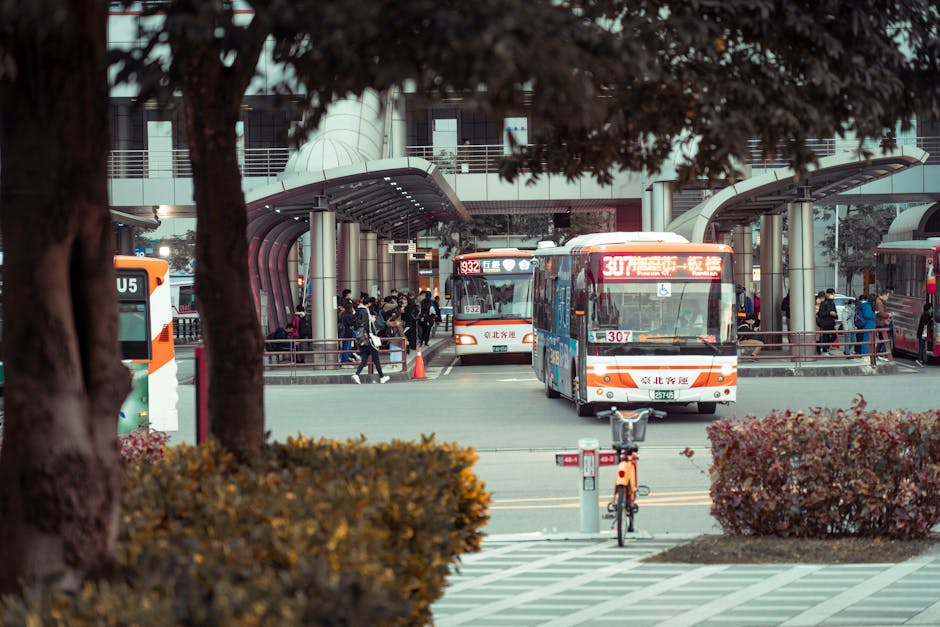
Beyond Delays: AI’s Game-Changing Impact on Urban Mobility
Ever felt the frustration of a delayed bus or a packed train during rush hour in a bustling city? We all have. Public transportation, while essential, often struggles with efficiency and predictability. But what if I told you that the future of urban transit isn’t just about faster trains or more buses, but about smarter systems powered by Artificial Intelligence?
Optimizing Routes & Predicting Demand: The Brain Behind the Wheels
AI algorithms are crunching massive datasets – traffic patterns, weather forecasts, historical ridership, even major event schedules – to dynamically adjust routes and schedules. This isn’t just about avoiding a traffic jam; it’s about predicting where and when demand will peak before it even happens.
- Deep Dive: From my experience analyzing various AI deployment scenarios, the true magic isn’t just in immediate rerouting, but in proactive resource allocation. Imagine an AI identifying an unusual spike in app-based ride-share requests in a specific district on a rainy Tuesday morning and automatically dispatching an extra bus to that route before passengers even realize there’s a problem. This level of foresight dramatically reduces wait times and improves overall service flow, often invisible to the end-user.
Predictive Maintenance & Enhanced Safety: Keeping Us Moving, Safely
Beyond scheduling, AI is a game-changer for maintaining the infrastructure itself. Sensors embedded in trains, buses, and tracks feed data to AI systems that can detect anomalies signaling potential failures long before they occur. This shifts maintenance from reactive to predictive, significantly reducing breakdowns and ensuring safer operations.
- Critical Take: While the promise of predictive maintenance is huge, the implementation challenge is often underestimated. Integrating legacy systems with new AI platforms can be a costly, data-intensive nightmare. I’ve seen projects stall due to dirty data or a lack of skilled personnel to interpret AI insights. It’s not a ‘set it and forget it’ solution; it requires continuous calibration and human oversight, especially in identifying false positives that could lead to unnecessary service disruptions.
A Personalized & Smoother Passenger Experience: Your Commute, Reimagined
How often have you struggled with real-time updates or felt lost in a new city’s transit system? AI-powered apps are now offering hyper-personalized travel information, from estimated arrival times accounting for real-time traffic to the least crowded carriage on a train.
- My AI Power User Perspective: As an AI Power User, I’ve personally experimented with several next-gen transit apps. The seamless integration of real-time location tracking with predictive analytics for my specific journey makes a huge difference. I particularly appreciate systems that can suggest alternative routes proactively when a delay is detected on my usual line, factoring in my preferences for speed versus comfort. It truly feels like having a personal transit assistant.
The AI-Powered Future of Urban Transit is Here
AI isn’t just a futuristic concept; it’s actively refining our daily commutes in big cities. From minimizing delays and ensuring safety to offering a more personalized journey, its impact is undeniable. While challenges exist, the path towards smarter, more reliable, and passenger-friendly public transportation is clearly paved with AI innovation. What’s your take on AI’s role in your city’s transit?
#AI in public transport #smart cities #urban mobility #predictive analytics #AI trends