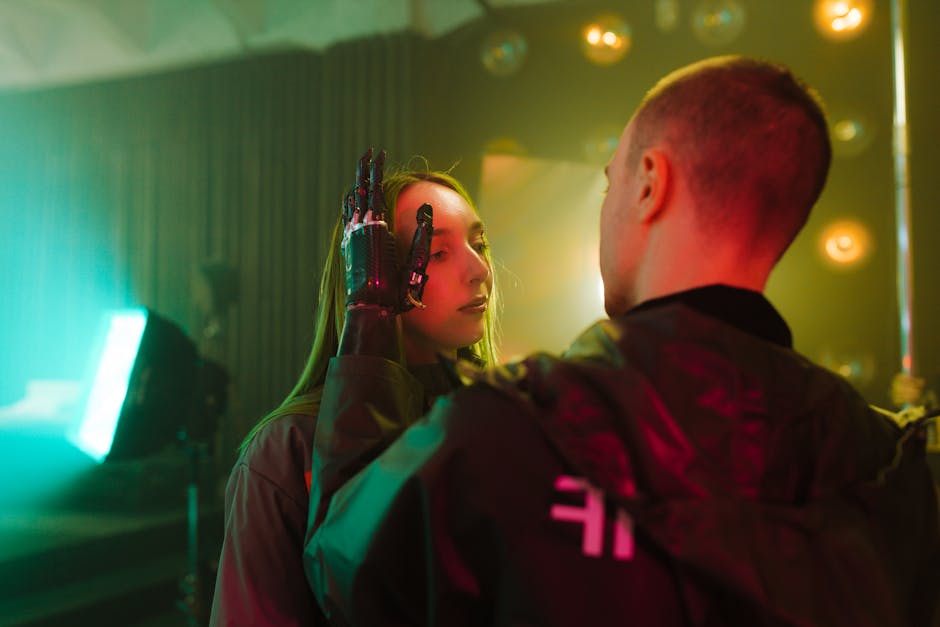
Scroll through your social media feed lately, and you might have noticed something… perfect. Perhaps a little too perfect. We’re talking about AI influencers, and they’re no longer just a futuristic concept; they’re a present-day phenomenon reshaping the digital landscape. As an AI Power User, I’ve been fascinated watching their evolution from niche experiments to genuine marketing assets. But in this dazzling virtual world, what’s real, and what’s merely a trend?
We’re at a fascinating crossroads where digital perfection meets human authenticity. Today, I want to dive deep into the world of AI influencers, comparing their burgeoning impact with the enduring value of human connection. Are they the future of marketing, or just a sophisticated gimmick?
The Irresistible Allure of the Perfectly Programmed Persona
Why are brands and audiences gravitating towards AI influencers like Lil Miquela, Imma, or Shudu Gram? The reasons are compelling, especially from a strategic marketing perspective. These digital entities offer unparalleled control, consistency, and a scandal-free existence – theoretically. They can be anywhere, anytime, speaking any language, and embodying any aesthetic without a bad hair day or a controversial tweet. Imagine a brand having an always-on, always-on-message ambassador; it’s a marketer’s dream.
From a user perspective, the novelty is undeniable. AI influencers often exist in hyper-stylized digital realms, offering a fresh visual experience. Their carefully curated lives can be aspirational in a way that feels almost attainable because, well, they are literally designed to be. I’ve personally seen how their perfectly rendered posts can generate significant engagement, often outperforming human counterparts in specific metrics.
The Indispensable Touch: Why Human Influencers Still Reign Supreme
Despite the undeniable advantages of their AI counterparts, human influencers bring something to the table that no algorithm can fully replicate: genuine emotion, spontaneity, and a lived experience. When a human influencer shares a personal story of struggle or triumph, recommends a product they genuinely use, or reacts authentically to a situation, that connection transcends mere aesthetics.
Think about the nuanced expressions, the unexpected humor, or the sheer vulnerability that builds trust and loyalty. These are the cornerstones of true influence. While AI can simulate emotions, it can’t feel them. This distinction is crucial for building deep, long-term relationships with an audience. We, as humans, crave connection, and there’s an inherent value in knowing there’s a real person, with real flaws and real insights, behind the screen.
Critical Takes & Deep Dive: Navigating the Uncanny Valley and Beyond
While the promise of AI influencers is vast, their deployment comes with significant hurdles and ethical considerations. My critical take as someone who works with AI daily is that the “no scandals” promise is a mirage. While they won’t have personal slip-ups, the creators behind them can, and any controversy associated with the human team invariably impacts the AI persona. Furthermore, the “uncanny valley” effect is real; sometimes, their perfection feels artificial, leading to disengagement rather than connection. I’d argue that for brands requiring deep emotional resonance or truly authentic storytelling, AI influencers are NOT recommended – at least not yet. The learning curve for creating a truly compelling AI persona that avoids this pitfall is steeper than most marketing teams anticipate.
For a deep dive into their future, I believe we’ll see AI influencers evolve in two key directions:
- Enhanced Emotional Intelligence: More sophisticated AI models will better understand and respond to human emotions, making interactions feel more natural.
- Hybrid Models: The most impactful future might lie in hybrid scenarios, where AI acts as a co-pilot, enhancing human influencers’ reach and content creation, or human creators “embody” AI personas to bridge the authenticity gap.
- Legal and Ethical Frameworks: We’re heading towards a future where clearer guidelines around disclosure, intellectual property, and ethical representation for AI-generated content will be paramount. This is an uncharted territory ripe for innovation and regulation.
Ultimately, the rise of AI influencers isn’t about replacing human connection but rather augmenting our digital experiences. They offer unique advantages for specific marketing goals, particularly where consistency and scalability are key. However, the irreplaceable magic of human authenticity and empathy will ensure that human influencers continue to thrive. The real challenge, and opportunity, lies in understanding how these two powerful forces can coexist and even complement each other, shaping a richer, more diverse digital landscape for us all.
#AI influencers #virtual influencers #digital marketing #AI trends #influencer marketing future