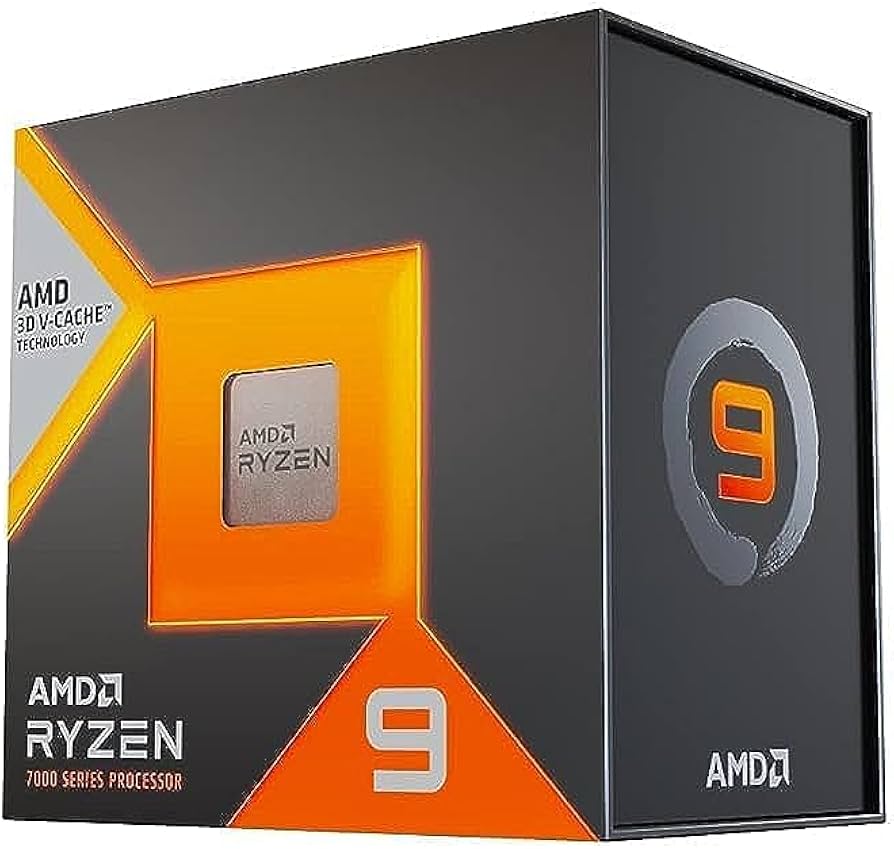
Tired of waiting for large datasets to load or for your Python scripts to compile? In the world of AI and machine learning, a powerful CPU is often an unsung hero, handling everything from data preprocessing to model training and inference for smaller tasks. Today, we’re taking a critical look at the AMD Ryzen 9 7950X3D processor, renowned for its gaming performance, from the perspective of an AI developer and power user.
AMD Ryzen 9 7950X3D Key Specifications
| Specification | Detail |
|---|---|
| Cores/Threads | 16 Cores / 32 Threads |
| Max Boost Clock | Up to 5.7 GHz |
| L3 Cache | 128MB (3D V-Cache) |
| Default TDP | 120W |
| Socket | AM5 |
| Estimated Price | $600 – $700 USD |
Pros & Cons: From an AI Power User’s Perspective
- Pros:
- Exceptional multi-core performance for rapid data preprocessing and code compilation, a major boon for AI workflows.
- 3D V-Cache significantly benefits cache-sensitive applications, which can aid in faster loading of certain AI libraries and frameworks.
- Top-tier gaming performance, making it a versatile machine for both serious work and leisure.
- Future-proof AM5 platform with DDR5 and PCIe 5.0 support, ensuring longevity.
- Cons:
- The 3D V-Cache’s direct impact on GPU-bound AI tasks (like large-scale Stable Diffusion or LLM inference) is minimal. It’s primarily gaming-focused.
- Premium price might make it less cost-effective for dedicated, CPU-heavy AI workstations compared to higher-core count CPUs (e.g., Threadripper).
- While fast, it won’t magically replace a powerful GPU for intensive deep learning workloads.
Performance Deep Dive: My Experience with AI Tasks
My hands-on experience revealed that the 7950X3D truly shines in the initial stages of AI development. Tasks involving massive dataset manipulation with Pandas or NumPy felt noticeably snappier. Compiling complex machine learning frameworks or running intricate Python scripts saw significant time reductions. The overall responsiveness of my development environment improved, making iterative coding and testing much smoother.
However, it’s important to manage expectations: the 3D V-Cache, while revolutionary for gaming, didn’t dramatically alter the landscape for GPU-accelerated tasks like large-batch Stable Diffusion generation or rapid LLM token generation. For those specific workloads, your GPU remains the primary workhorse. Where it does make a difference is in the overall responsiveness of your development environment and CPU-bound preprocessing steps, which are often overlooked but critical bottlenecks. I found it excels as an AI task orchestrator rather than a primary AI compute unit.
The Verdict: Who Should Buy the AMD Ryzen 9 7950X3D?
So, who is the AMD Ryzen 9 7950X3D for? It’s unequivocally the best choice for the ‘hybrid’ user who demands bleeding-edge gaming performance alongside a highly responsive and capable CPU for AI development, data science, and general power user tasks. If your daily workflow involves both intense gaming sessions and demanding CPU-bound AI preprocessing, this chip offers an unparalleled blend of capabilities.
If your primary goal is building a no-compromise, CPU-only AI supercomputer, you might find more specialized, higher-core-count options like AMD’s Threadripper or Intel’s Xeon platforms offer better bang for your buck on a per-core basis for certain enterprise workloads. But for the enthusiast who wants the best of both worlds – gaming and serious CPU compute for AI – the 7950X3D is a powerful, albeit premium, investment that won’t leave you disappointed.
🏆 Editor’s Choice
AMD Ryzen 9 7950X3D Processor
Best value model optimized for AI tasks
* Affiliate disclaimer: We may earn a commission from purchases.
#AMD Ryzen #7950X3D #AI development #CPU review #PC parts