Frustrated by Slow Data Transfers and Vulnerable AI Project Files?
As an AI developer, I'm constantly juggling massive datasets, intricate models, and critical project files. The last thing I need is a bottleneck in my workflow, whether it's waiting endlessly for data to transfer or, even worse, fearing data loss from an accidental drop or a splash of coffee. That's where a reliable, high-performance portable SSD becomes not just a convenience, but a necessity.
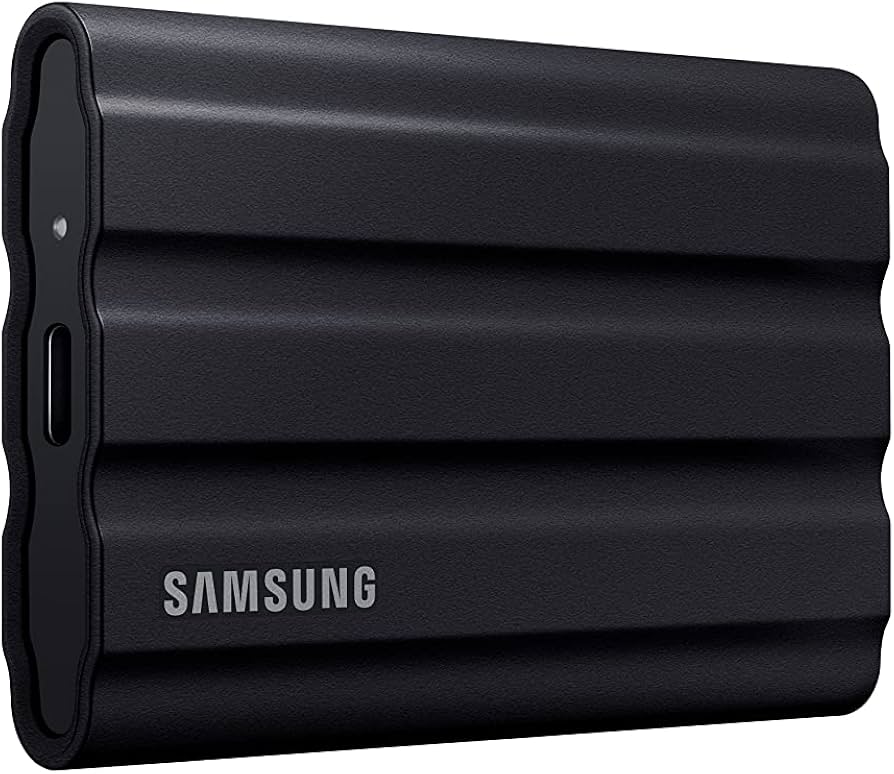
Today, we're putting the Samsung T7 Shield 2TB Portable SSD through its paces. Does it live up to the hype as a rugged, blazing-fast drive capable of protecting your invaluable AI work? Let's dive in.
Unpacking the Power: Key Specifications at a Glance
Before we talk about performance, here's a quick look at what the T7 Shield brings to the table:
| Feature | Specification |
|---|---|
| Capacity | 2TB (also available in 1TB, 4TB) |
| Interface | USB 3.2 Gen 2 (10Gbps) |
| Sequential Read Speed | Up to 1,050 MB/s |
| Sequential Write Speed | Up to 1,000 MB/s |
| Durability | IP65 Dust & Water Resistance, 3-meter Drop Resistance |
| Dimensions | 88 x 59 x 13 mm |
| Weight | 98 grams |
| Security | AES 256-bit Hardware Encryption |
The Good, The Great, and The 'Could Be Better'
After weeks of using the T7 Shield for various AI-related tasks, here's my honest breakdown:
Pros:
- Rugged Reliability: The IP65 rating and 3-meter drop resistance aren't just marketing fluff. I've used this drive outdoors, in dusty labs, and even survived a minor splash. For anyone doing fieldwork or needing robust storage for valuable datasets, this is a game-changer.
- Blazing-Fast Transfers: Moving hundreds of gigabytes of image or text datasets for training is no longer an all-day affair. I consistently hit speeds near its advertised maximums, drastically cutting down on project setup and transfer times. This is where AI productivity really shines with this drive.
- Compact & Lightweight: It slips into any pocket or gear bag effortlessly. Carrying multiple large AI models or entire project environments is incredibly convenient.
- Hardware Encryption: Protecting proprietary algorithms or sensitive client data is paramount. The built-in 256-bit AES hardware encryption offers excellent peace of mind.
- Broad Compatibility: Works flawlessly across my Windows dev machine, MacBook, and even my Android tablet for quick data access.
Cons:
- Premium Price Tag: While its features justify the cost for professionals, it's undeniably more expensive than non-rugged or slower portable SSDs.
- Heat Under Sustained Load: During very long, continuous transfers of hundreds of GBs (e.g., replicating a massive dataset), the drive can get noticeably warm. It didn't affect performance for me, but it's something to be aware of.
- No Built-in Cable Storage: A minor nitpick, but a small integrated cable holder would have been a nice touch for ultimate portability.
Deep Dive: How the T7 Shield Boosts My AI Workflow
It's easy to talk about MB/s, but what does that mean for an AI practitioner? For me, the T7 Shield isn't just about raw speed; it's about removing friction and mitigating risk.
Imagine this: You've just finished collecting a massive sensor dataset from a remote location. Instead of painstakingly transferring it over a slow network or risking data corruption on a flimsy drive, you plug in the T7 Shield. Hundreds of gigabytes vanish onto the drive in minutes. That's less time waiting, more time for model training.
Or perhaps you're collaborating on an LLM project. Sharing multi-gigabyte models or fine-tuning datasets via cloud storage can be slow and costly. With the T7 Shield, I can hand over a physical drive with encrypted data, ensuring both speed and security. It's also my go-to for backing up my entire development environment or critical training checkpoints – knowing they're protected from physical damage is a huge relief.
My Critical Take: While the T7 Shield is a speed demon for data transfer, it's crucial to remember it won't accelerate your GPU's training process directly. Its value lies in optimizing the *data pipeline* – getting your data to your compute resources faster and more reliably. Don't expect it to magically make your Stable Diffusion generations quicker, but expect it to make managing and moving your underlying datasets and models a breeze.
The Verdict: Is the Samsung T7 Shield 2TB Right for Your AI Arsenal?
If you're an AI professional, data scientist, or content creator who:
- Regularly works with large datasets and AI models (100GB+).
- Needs lightning-fast data transfer speeds to minimize waiting.
- Operates in diverse environments where durability is key (fieldwork, travel).
- Prioritizes data security with hardware encryption.
- Values portability and reliability for critical projects.
Then the Samsung T7 Shield 2TB Portable SSD is an exceptional investment. Its combination of speed, ruggedness, and security makes it a top-tier choice for safeguarding and mobilizing your most important digital assets.
However, if your needs are simpler, your budget is extremely tight, and raw speed or extreme durability aren't critical requirements (e.g., occasional file backups, standard documents), then a more basic, less expensive SSD might suffice. But for serious AI work where data integrity and efficiency are paramount, the T7 Shield is hard to beat.
🏆 Editor’s Choice
Samsung T7 Shield 2TB Portable SSD
Best value model optimized for AI tasks
* Affiliate disclaimer: We may earn a commission from purchases.
#samsungT7Shield #portableSSD #AIdevelopment #dataSecurity #ruggedSSD