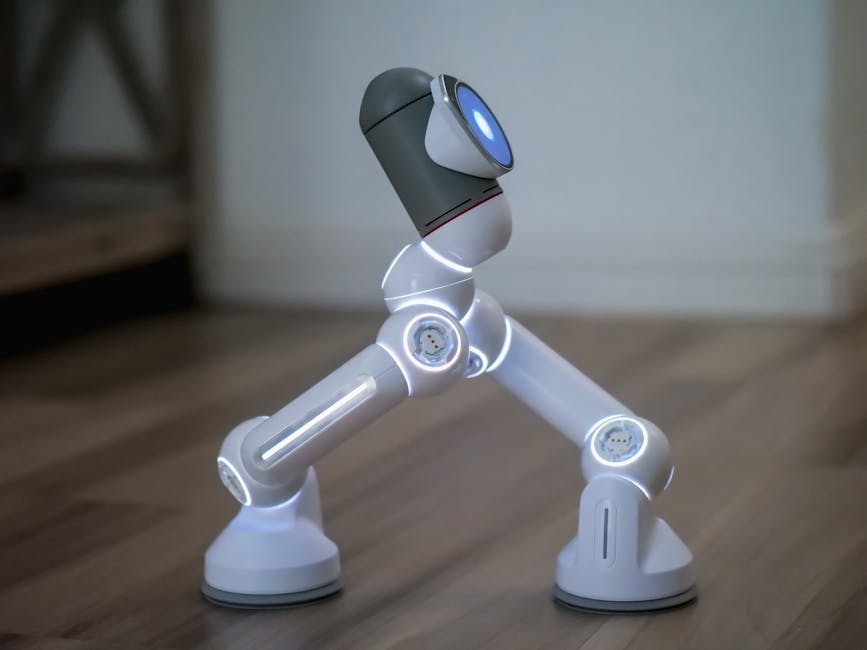
The Unstoppable Fusion: AI and Robotics Reshaping Our World
Have you ever watched a robotic arm meticulously assemble car parts in a factory, or a self-navigating cleaner silently glide through a shopping mall? What once felt like a distant sci-fi fantasy is now our everyday reality. But we’re not just talking about machines that move; we’re talking about robots imbued with artificial intelligence, capable of learning, adapting, and making decisions. This powerful synergy isn’t just an incremental step; it’s a quantum leap that promises to redefine industries, workforce dynamics, and even our daily lives. As an AI power user, I’ve had a front-row seat to this evolution, and I’m here to share what I’ve learned, peeling back the layers beyond the glossy headlines.
When AI Becomes the Robot’s Brain: A New Era of Autonomy
Traditional robots were bound by the strictures of pre-programmed commands, executing repetitive tasks with precision but little flexibility. Enter AI, the transformative force that elevates robotics from mere automation to true autonomy. AI grants robots the cognitive abilities to perceive, reason, learn, and interact with their environment in ways previously unimaginable.
- Advanced Perception: Through AI-driven computer vision and sensor fusion, robots can interpret complex visual data, recognize objects, assess their properties, and navigate dynamic environments with unprecedented accuracy.
- Intelligent Decision-Making: AI algorithms enable robots to process vast amounts of data, identify patterns, and make optimal decisions in real-time, even in unpredictable scenarios. This means they can adapt to changing conditions without human intervention.
- Natural Interaction: With advancements in natural language processing and human-robot interaction, robots can now understand and respond to human commands more intuitively, facilitating seamless collaboration in shared workspaces.
From my own experience deploying and integrating these systems, the true magic happens when a robot isn’t just performing a task, but understanding the *context* of that task. This cognitive leap allows for far greater flexibility and efficiency, making robots accessible even to users without deep programming expertise. It’s not just about doing more; it’s about doing things smarter.
Transforming Industries: Where AI-Powered Robotics Are Making an Impact
The convergence of AI and robotics is already having a profound impact across a multitude of sectors, driving efficiencies, enhancing safety, and unlocking new possibilities:
- Smart Manufacturing: In factories, AI-powered robots handle everything from precision assembly and quality inspection to automated material handling, optimizing production lines, reducing defects, and enabling 24/7 operations.
- Logistics & Supply Chain: Autonomous Mobile Robots (AMRs) use AI to navigate warehouses, sort packages, and manage inventory, dramatically accelerating fulfillment times and minimizing human error.
- Healthcare: Surgical robots, enhanced by AI, assist surgeons with unparalleled precision, leading to less invasive procedures and faster patient recovery. AI-driven companion robots are also emerging for patient monitoring and elderly care.
- Service Industry: From hospitality to retail, service robots are taking on repetitive tasks like cleaning, delivery, and customer guidance, freeing human staff to focus on more complex, personalized interactions.
It’s clear that this synergy is not just automating tasks; it’s catalyzing a fundamental shift in how industries operate, promising a future of enhanced productivity, safety, and innovation.
The Critical Take: Navigating the Unseen Challenges of AI Robotics
While the promise of AI and robotics is undeniable, as someone deeply embedded in the world of AI solutions, I believe it’s crucial to look beyond the marketing hype and address the **real-world challenges and nuanced considerations** that often get overlooked. It’s not always a smooth ride, and ignoring the bumps can lead to costly missteps.
The Hidden Hurdles: High Initial Costs and Integration Complexities
One of the most significant challenges I’ve consistently encountered when evaluating and deploying AI-robotics solutions is the **substantial upfront investment** coupled with the **complexities of system integration**. These aren’t plug-and-play devices. Not only are the cutting-edge robots themselves expensive, but integrating them into existing legacy IT infrastructure and operational workflows often demands significant time, specialized expertise, and unforeseen resources. I’ve personally seen projects extend far beyond initial timelines due to unexpected data standardization issues, API incompatibilities, and the sheer effort required to get disparate systems to ‘speak’ to each other effectively. It’s rarely just about buying a robot; it’s about redesigning an entire ecosystem.
Deep Dive: The Data Quality Conundrum and Ethical Minefields
Furthermore, the ‘intelligence’ of an AI robot is only as good as the **quality of the data it’s trained on**. This is a critical point that often gets downplayed. If the training data is incomplete, biased, or poorly labeled, the robot’s decisions can be flawed, leading to inefficient operations or even dangerous outcomes. I once worked on a project where a robot, trained exclusively in a controlled environment, completely failed in a slightly different real-world setting because its training data lacked the necessary environmental variances. This taught me that **without a robust, continuous investment in data collection, cleaning, and validation, the promised efficiencies of AI robotics remain elusive.**
Beyond technicalities, the widespread adoption of AI robots also opens a Pandora’s box of **ethical and societal questions**. What are the implications for job displacement and workforce reskilling? Who is accountable when an autonomous robot makes a critical error? How do we prevent algorithmic bias from perpetuating discrimination in robotic applications? These aren’t just academic debates; they are pressing issues that demand proactive policy-making, robust ethical guidelines, and continuous societal dialogue. Failing to address these can lead to significant social friction and mistrust, undermining the very benefits AI robotics aims to deliver.
Preparing for a Smarter, More Collaborative Future
The convergence of AI and robotics is an undeniable force, poised to maximize industrial productivity and innovation. However, as I’ve highlighted, successful implementation demands not only overcoming technical hurdles but also a deep understanding of the societal and ethical implications. We must move beyond mere ‘automation’ and strategically prepare for an era of **’intelligent collaboration’**—where humans and AI-powered robots work synergistically. Seizing the opportunities while proactively mitigating the risks requires foresight and a nuanced perspective, now more than ever.
#AI robotics #industrial automation #future of work #smart manufacturing #AI trends