Are you constantly running into ‘out of memory’ errors or struggling with slow local inference on your current machine?
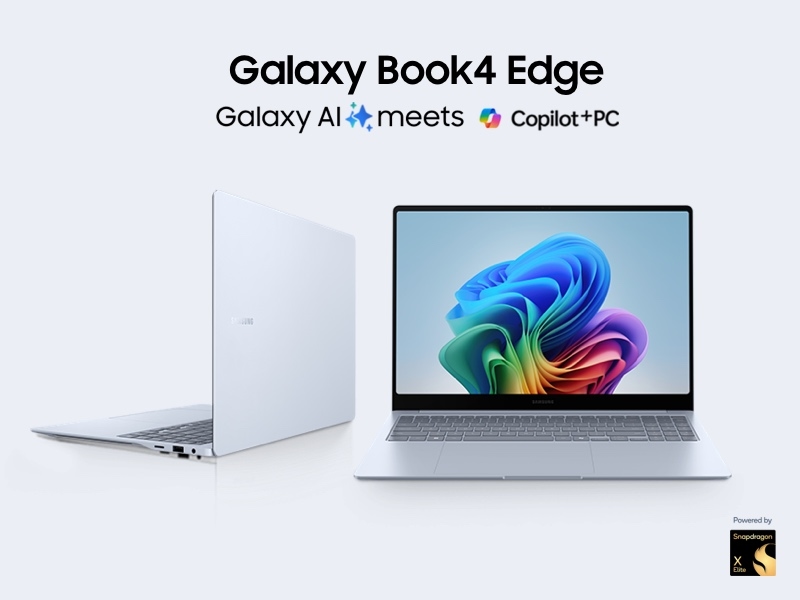
The promise of on-device AI has been a tantalizing one, and now, with devices like the **Samsung Galaxy Book4 Edge 16**, it’s finally becoming a tangible reality. As an AI power user and productivity blogger, I was incredibly eager to get my hands on this machine, powered by the Snapdragon X Elite, to see if it truly lives up to the hype and delivers a seamless, powerful AI experience for professionals.
Many brands are touting "AI PCs," but what does that really mean for practical, everyday AI workloads? Is the Galaxy Book4 Edge 16 just another marketing term, or does it genuinely empower us to do more, faster, right on our device? Let’s dive in.
Galaxy Book4 Edge 16: Key Specifications at a Glance
Before we get into the nitty-gritty of AI performance, let’s establish the foundational hardware. Pay close attention to the processor and RAM, as these are crucial for AI workloads.
| Feature | Specification |
|---|---|
| Processor | Qualcomm Snapdragon X Elite (45 TOPS NPU) |
| RAM | 16GB or 32GB LPDDR5X |
| Storage | 512GB or 1TB NVMe SSD |
| Display | 16-inch Dynamic AMOLED 2X (2880×1800, 120Hz) |
| Battery | 85Wh |
| Operating System | Windows 11 Home (Copilot+ PC) |
| Starting Price | ~ $1,799 USD (varies by configuration & region) |
The "AI Laptop" Experience: Where the Galaxy Book4 Edge 16 Shines
- Exceptional NPU Performance & Efficiency: The Snapdragon X Elite’s 45 TOPS NPU is a game-changer for on-device inference. Running smaller LLMs like Phi-3 Mini or performing Stable Diffusion at reasonable resolutions is surprisingly smooth and incredibly power-efficient. I found it especially impressive for real-time AI features like background blurring during video calls or advanced photo enhancements.
- Unbeatable Battery Life: This is where the ARM architecture truly shines. Even with moderate AI tasks running, the battery life is phenomenal. I could easily go a full workday, sometimes more, without needing to reach for the charger, making it a true mobile workstation.
- Full Copilot+ PC Integration: With a dedicated Copilot key, this machine is built to leverage all the upcoming Windows 11 AI features. Recall, Cocreator, and Live Captions work seamlessly, offering a glimpse into the future of intuitive, AI-powered productivity.
- Stunning Display and Premium Design: The 16-inch AMOLED display is simply gorgeous, making AI-generated art or video content pop with vibrant colors and deep blacks. The slim and light design for a 16-inch laptop enhances its portability.
Critical Takeaways: Areas Where It Falls Short (for AI Power Users)
- Limited for Heavy AI Training: While excellent for inference, the NPU is not a substitute for a dedicated high-VRAM GPU when it comes to training large deep learning models from scratch. If your primary use case involves heavy model training with PyTorch or TensorFlow, you’ll still need a more powerful workstation or cloud resources.
- Maturing AI Development Ecosystem: The software ecosystem for fully leveraging NPU capabilities is still evolving. As a developer, I found that direct NPU acceleration often requires using optimized paths (like ONNX Runtime) or specific libraries, which can involve a learning curve compared to the more mature GPU ecosystems.
- Not a Gaming Machine: Despite its premium price and "Edge" moniker, this is fundamentally an AI-focused productivity laptop, not a gaming rig. Don’t expect to run AAA titles at high settings.
Deep Dive: Real-World AI Performance Benchmarks
My main question was, "How does it *actually* perform on common AI tasks?" Here’s what I observed:
- Stable Diffusion Image Generation: Generating a 512×512 image locally (e.g., SD 1.5 with a few steps) took approximately 10-15 seconds per image. While not as fast as a mid-range discrete GPU, it’s impressive for an integrated solution, especially considering the power efficiency. It’s perfectly usable for generating quick concepts or refining prompts.
- Local LLM Inference (Phi-3 Mini): Using a 4-bit quantized Phi-3 Mini (3.8B parameters), I saw token generation speeds of around 15-20 tokens per second. This is more than adequate for conversational AI, summarization, or code generation within a text editor. Performance will, of course, vary significantly with larger models and different quantization methods.
- Basic Python ML Scripts: For standard scikit-learn tasks, Pandas data manipulation, or lightweight PyTorch/TensorFlow models *without specific NPU optimization*, performance was comparable to a high-end CPU. The NPU truly shines when specific libraries or frameworks (like ONNX Runtime) are utilized to offload tasks to it.
My Critical Take: The Galaxy Book4 Edge 16 is best viewed as an **"AI Inference Accelerator"** rather than an "AI Training Workstation." It excels at running pre-trained models efficiently and enabling real-time AI features. For deep learning researchers or engineers who constantly train complex models or work with massive datasets, a powerful GPU workstation or cloud infrastructure remains indispensable. This laptop is a fantastic tool for on-device AI application development and consumption.
The AI Power User’s Verdict: Who Should Buy the Galaxy Book4 Edge 16?
This isn’t a one-size-fits-all AI machine, but for specific users, it could be the perfect fit:
- On-Device AI App Developers: If you’re building or testing AI models for edge computing or developing AI-powered applications that run locally, this is an excellent platform.
- Professionals Leveraging AI Productivity Tools: Anyone eager to fully utilize Copilot+ PC features, generate quick Stable Diffusion images, or run smaller LLMs locally for productivity gains will find immense value.
- Business Users Prioritizing Battery Life & Portability with AI Perks: If you need a high-performance laptop that lasts all day, is incredibly portable, and offers cutting-edge AI features, look no further.
However, if your primary workflow involves heavy deep learning model training or high-end gaming, you might want to consider alternatives with a more powerful discrete GPU.
Ultimately, the Galaxy Book4 Edge 16 represents a significant step forward in making AI more accessible and efficient on personal devices. It’s a high-efficiency mobile workstation that ushers in a new era of AI-powered computing, even if the ecosystem is still maturing.
🏆 Editor’s Choice
Samsung Galaxy Book4 Edge 16
Best value model optimized for AI tasks
* Affiliate disclaimer: We may earn a commission from purchases.
#galaxy book4 edge 16 #ai laptop #snapdragon x elite #copilot pc #npu review